Understanding what does hertz mean in gaming is crucial for every US gamer looking to optimize their visual experience and competitive edge. This comprehensive guide breaks down the science behind refresh rates, explaining how Hertz (Hz) directly impacts screen fluidity, responsiveness, and overall gameplay enjoyment. For the millions of US gamers, including the 87% who regularly engage and average over 10 hours a week, a smooth visual experience is not just a luxury, it's a necessity. We will navigate the often-confusing landscape of monitor specifications, frame rates, and adaptive sync technologies like FreeSync and G-Sync. Whether you are balancing a full-time job with late-night raids, or a parent introducing your kids to the joy of gaming, this resource offers practical, actionable advice to help you choose the right gear and settings without breaking the bank. Discover how even subtle changes in your display's refresh rate can significantly enhance your relaxation, skill-building, and social play, turning choppy graphics into buttery-smooth action.
What is Hertz in gaming?
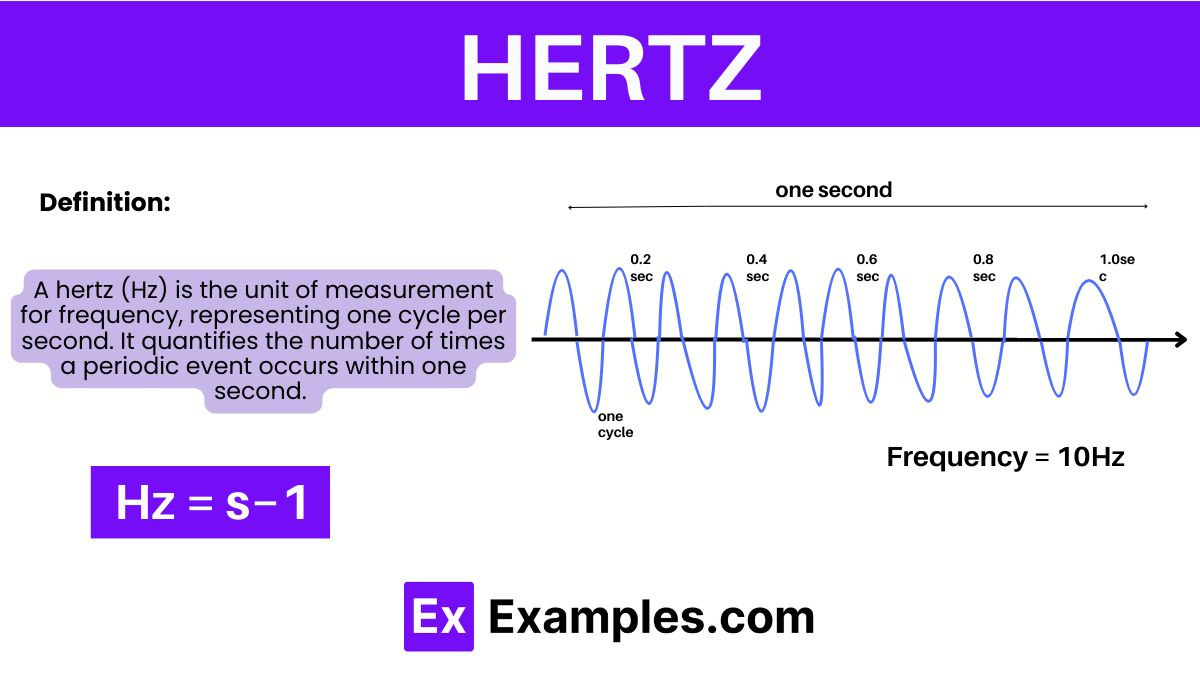
Hertz (Hz) in gaming refers to your monitor's refresh rate, which is how many times per second your screen updates the image. A higher Hz means smoother visuals and a more responsive experience.
Why is a higher Hertz better for gaming?
A higher Hertz provides a smoother, more fluid visual experience by displaying more frames per second, reducing motion blur, and allowing you to react faster to in-game events, especially in fast-paced competitive games.
What is the ideal Hertz for competitive games?
For competitive gaming, 144Hz is widely considered an excellent baseline, offering a significant advantage over 60Hz. Professional players often opt for 240Hz or even 360Hz monitors for the ultimate responsiveness.
Does my GPU affect the Hertz I can experience?
Yes, your Graphics Processing Unit (GPU) significantly affects the Hertz you experience. While your monitor has a maximum Hertz, your GPU must be powerful enough to generate frames (FPS) at or above that rate for you to fully utilize the higher refresh rate.
How do I set my monitor to its maximum Hertz?
On Windows, right-click your desktop, go to Display Settings, then Advanced Display Settings, and choose the highest refresh rate available. On consoles like PS5 or Xbox Series X, navigate to the system's display settings to enable 120Hz output if supported.
What's the best refresh rate for gaming?
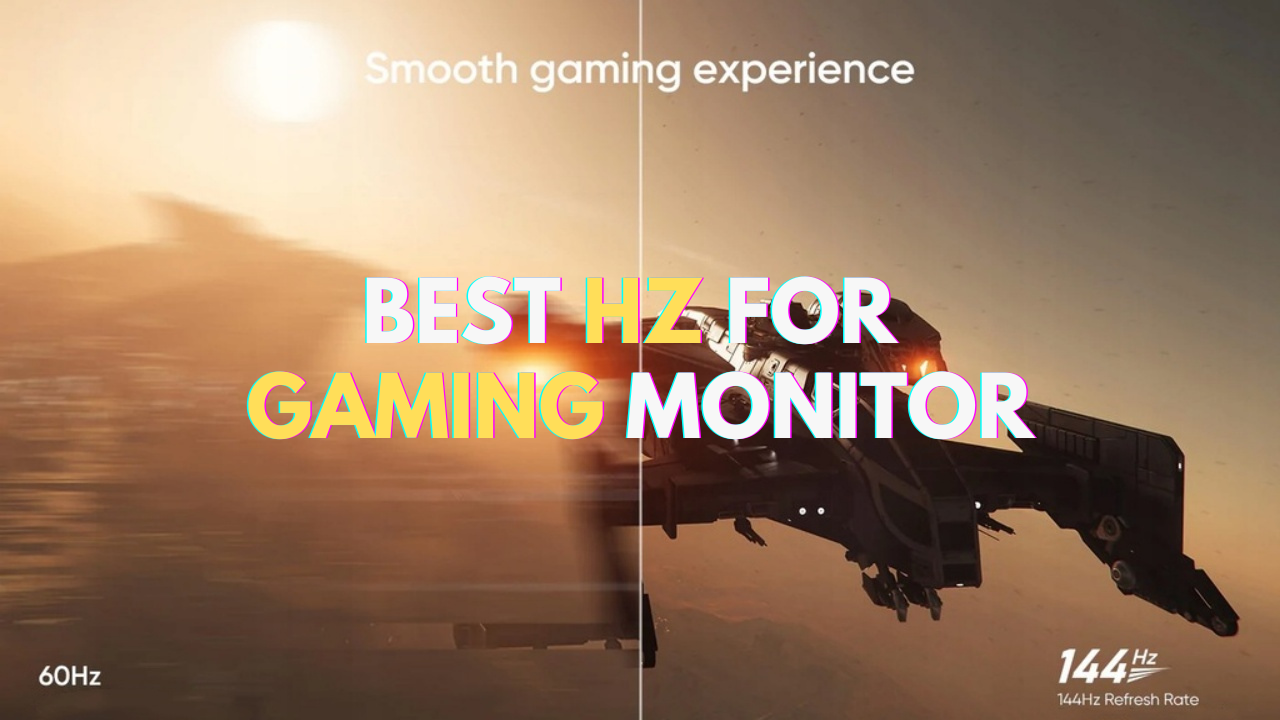
The best refresh rate for gaming often sits around 144Hz for most users, offering a significant upgrade in smoothness over 60Hz without the premium cost of 240Hz or 360Hz. It provides an excellent balance for both casual and competitive play.
How does refresh rate affect aiming and reaction time?
A higher refresh rate can improve aiming and reaction time by presenting visual information faster and reducing motion blur. This allows for clearer target tracking and quicker perception of enemy movements, giving players a micro-advantage in fast-paced scenarios.
Can I truly see the difference between 144Hz and 240Hz?
Many gamers can perceive a difference between 144Hz and 240Hz, though it's less dramatic than the jump from 60Hz to 144Hz. The benefits are most noticeable to highly sensitive players or professional esports competitors seeking every possible edge in games demanding extreme precision.
Do all games benefit from high refresh rates?
While all games will display smoother on high-refresh-rate monitors, the practical benefit is most pronounced in genres like first-person shooters, fighting games, and racing games. Slower-paced RPGs or strategy games will show less performance-critical improvement.
What cables support high refresh rates like 144Hz or 240Hz?
To support high refresh rates, you'll typically need a DisplayPort cable (version 1.2 or higher for 144Hz at 1080p/1440p, 1.4 for 4K) or a high-speed HDMI cable (version 2.0 for 144Hz at 1080p/1440p, 2.1 for 4K at 120Hz+). Older or lower-quality cables may limit your refresh rate.
Will my internet speed impact my refresh rate?
Your internet speed does not directly impact your monitor's refresh rate. However, for online multiplayer and cloud gaming, a stable, fast internet connection is crucial for maintaining a consistent FPS, which in turn allows your high-Hertz monitor to display frames without lag or stutter from network issues.
Should I prioritize refresh rate or resolution for gaming?
For competitive gamers, prioritizing refresh rate (e.g., 144Hz at 1080p/1440p) is often recommended for maximum responsiveness. For immersive single-player experiences, some gamers prefer higher resolution (e.g., 4K at 60Hz). The ideal balance depends on your hardware, budget, and primary game genres.
Hey fellow gamers! Ever find yourself frustrated by choppy gameplay or noticing a slight delay between your actions and what you see on screen, especially when you're finally unwinding after a long day? You're not alone. Balancing jobs, families, and life means our gaming time is precious, and we want it to be as smooth and enjoyable as possible. This month, with US gamers averaging over 10 hours a week and 87% engaging regularly, optimizing our setup without getting lost in technical jargon is more important than ever.
You might have heard the term 'Hertz' or 'Hz' thrown around in gaming communities, often in discussions about monitors or competitive play. But what does hertz mean in gaming, and why should you, a busy gamer looking for relaxation, fun, and perhaps a slight edge, care about it? Simply put, understanding Hertz is key to unlocking a visibly smoother, more responsive, and ultimately more satisfying gaming experience. It’s not just about flashy hardware; it’s about making the most of your existing setup and making smart upgrade choices when the time comes. Let's dive in and demystify Hertz together, turning those potential setup issues into peak performance.
What Does Hertz Mean in Gaming Anyway?
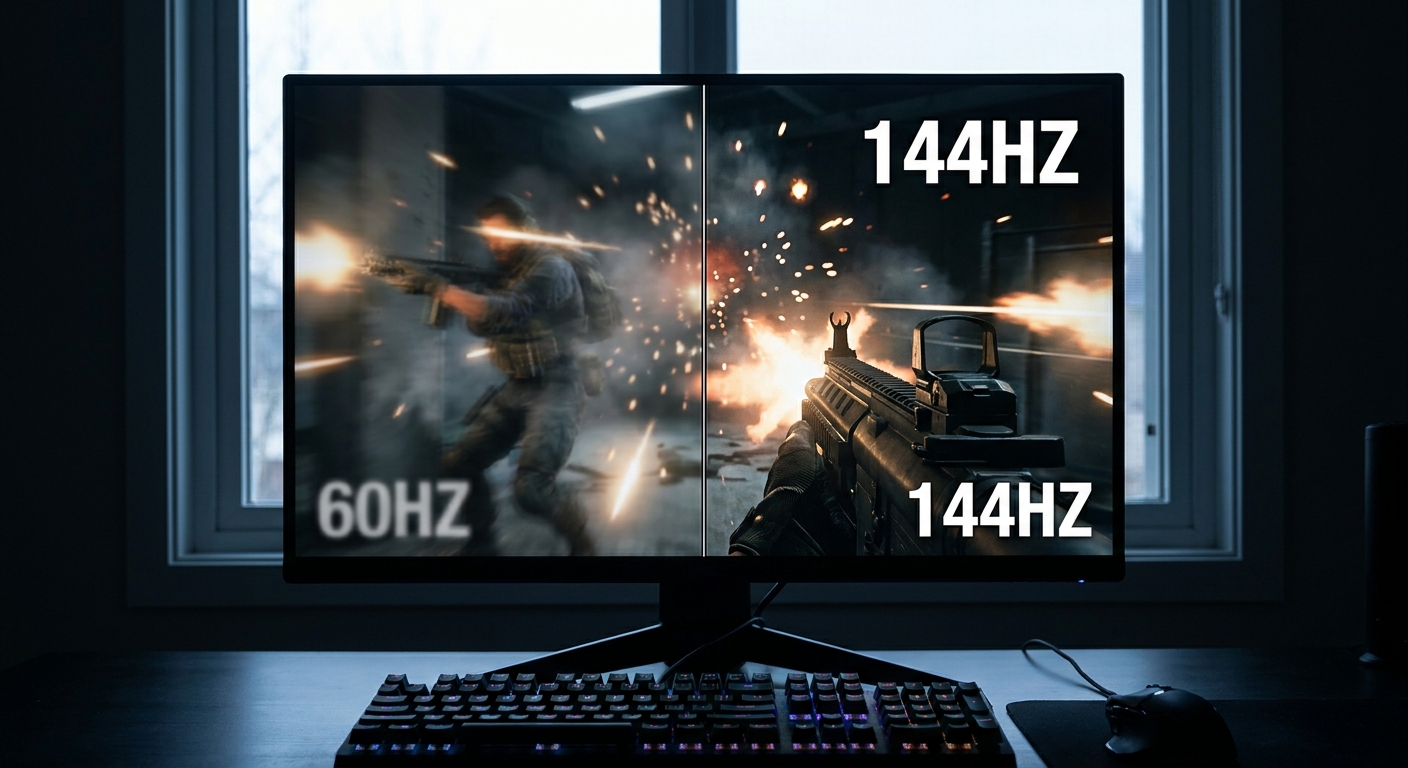
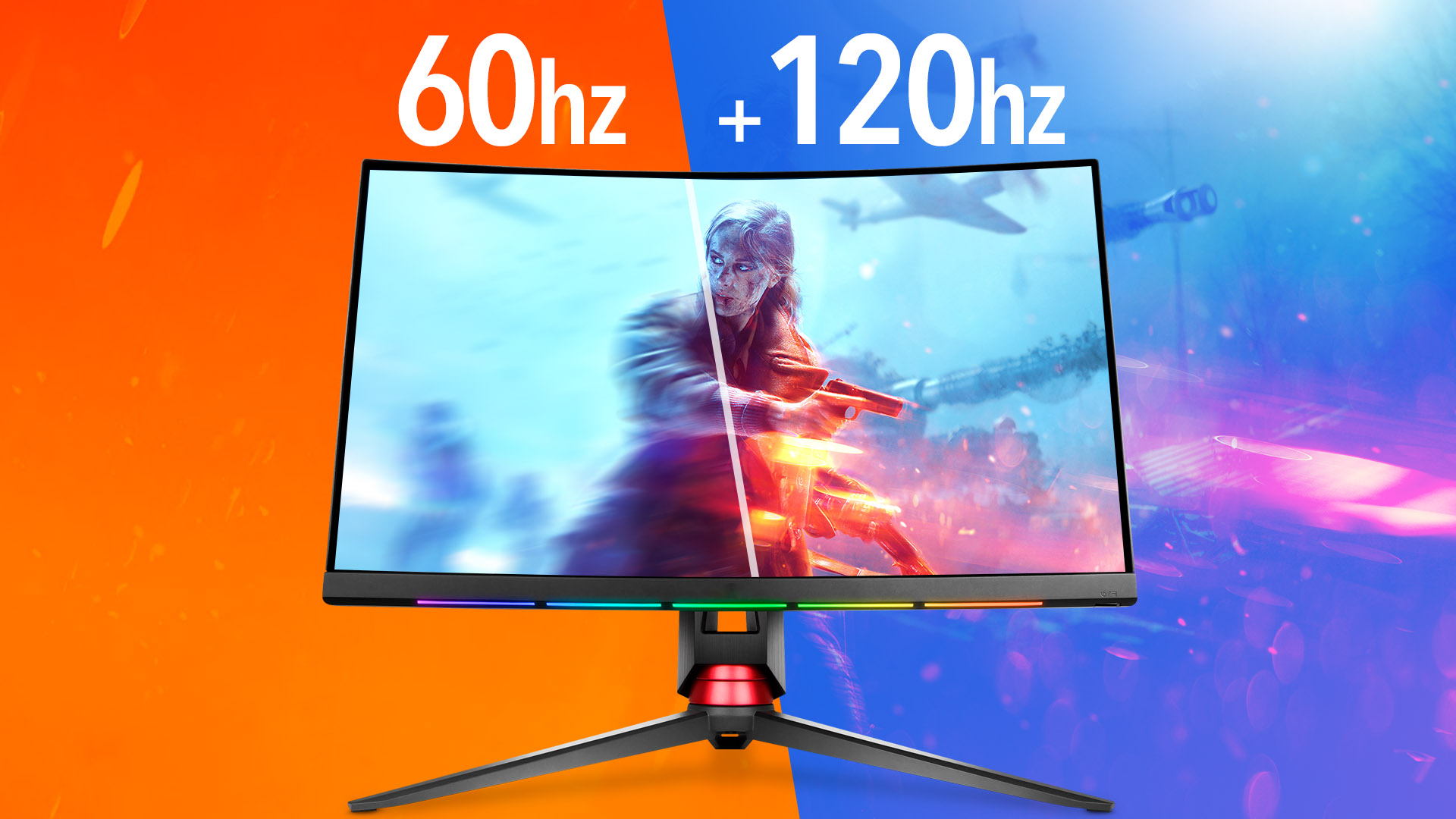
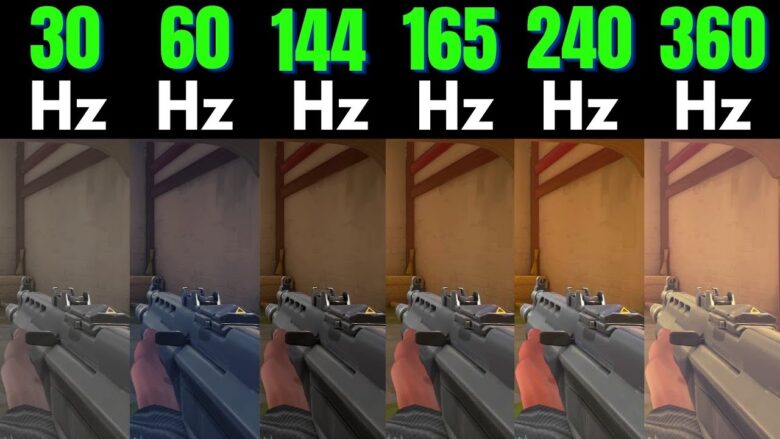
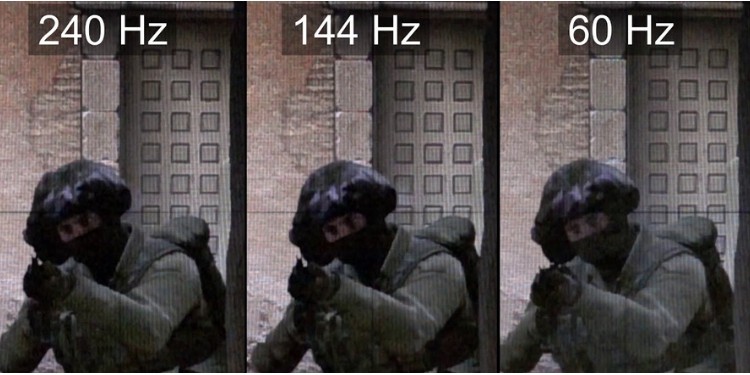
At its core, Hertz (Hz) in gaming refers to your monitor's refresh rate. This number tells you how many times per second your display can redraw the image on your screen. Think of it like flipping through a stack of pictures: a higher Hz means more pictures are shown in the same amount of time, creating a much smoother, more fluid animation. For gamers, this translates directly to how seamless and immediate your game appears. A 60Hz monitor refreshes 60 times per second, while a 144Hz monitor refreshes 144 times per second, offering a noticeable difference in visual fluidity.
How Does Hertz Impact My Actual Gaming Experience?
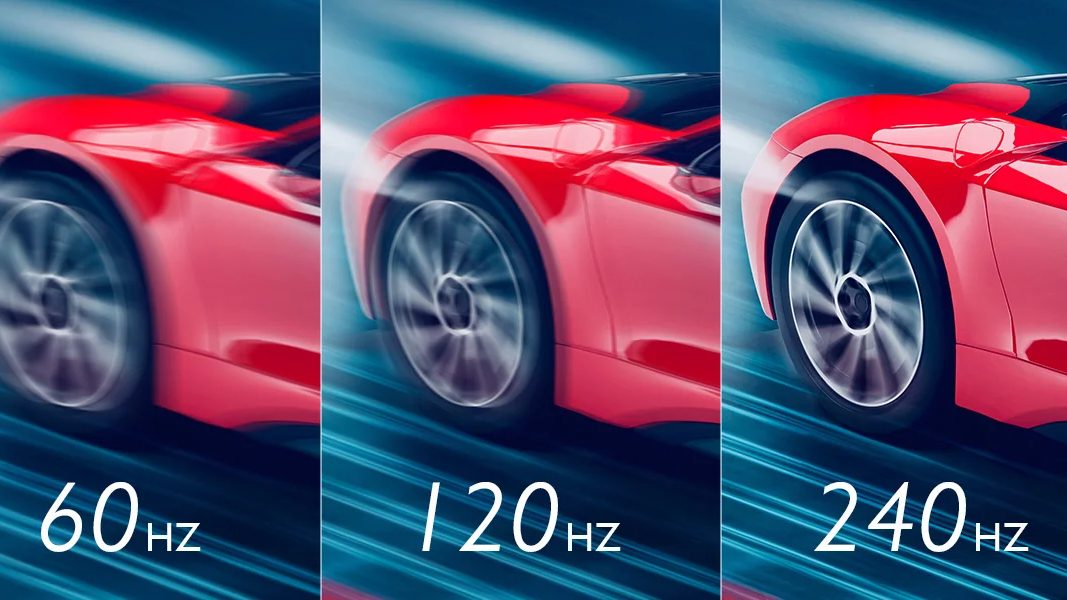
The impact of a higher refresh rate on your gaming experience is significant and often immediately noticeable. First and foremost, it provides vastly smoother visuals. This reduces motion blur, making fast-paced action games like competitive shooters or racing titles much clearer and easier to track. Secondly, higher Hertz can lead to improved responsiveness. While not directly reducing input lag from your mouse or keyboard, the quicker display updates mean you see new information from the game engine sooner, allowing you to react faster to in-game events. This can give you a crucial advantage in competitive online titles where every millisecond counts, helping you feel more connected to the game.
Is There a Difference Between Hertz and FPS?
Yes, Hertz (Hz) and Frames Per Second (FPS) are distinct but closely related concepts in gaming. FPS measures how many frames your graphics card (GPU) is generating per second. Hertz, as we discussed, is how many times your monitor can display those frames per second. Imagine your GPU is a factory producing cars (frames) and your monitor is a showroom displaying them. If the factory produces 120 cars per second (120 FPS) but the showroom can only display 60 cars per second (60Hz monitor), you're only seeing half of what your GPU is producing. Ideally, you want your FPS to match or exceed your monitor's Hertz to get the full benefit of your hardware.
What Hertz Should My Gaming Monitor Have?
The ideal Hertz for your gaming monitor depends on your budget, the games you play, and your personal preferences. For casual gamers who primarily enjoy single-player adventures or cozy games, a 60Hz monitor is still perfectly fine and delivers a solid experience. However, if you play competitive multiplayer games or simply crave smoother visuals, stepping up to a 120Hz or 144Hz monitor offers a substantial upgrade without an astronomical cost. Many US gamers find 144Hz to be the sweet spot, providing a massive jump in smoothness from 60Hz. For the most dedicated esports players or those with top-tier hardware, 240Hz or even 360Hz monitors provide the absolute pinnacle of fluidity, though the visual difference from 144Hz becomes less dramatic for most players.
Can My PC or Console Handle Higher Hertz?
This is a critical question for many gamers. While your monitor might support a high refresh rate like 144Hz, your gaming PC or console needs to be powerful enough to generate frames at or above that rate. For PC gamers, this primarily depends on your graphics card (GPU) and processor (CPU). A powerful GPU is essential for achieving high FPS in modern games, especially at higher resolutions. Consoles like the PlayStation 5 and Xbox Series X are increasingly supporting 120Hz gaming, but only for specific titles and resolutions. Always check the game's requirements and your hardware's capabilities before investing in a high-refresh-rate monitor to ensure you can actually utilize it.
How Do I Check and Change My Monitor's Refresh Rate?
Setting your monitor to its highest refresh rate is a common step many gamers overlook. Here’s how you typically do it:
For Windows PC:
- Right-click on your desktop and select 'Display settings'.
- Scroll down and click on 'Advanced display settings'.
- Under 'Refresh rate', select the highest available option.
For macOS:
- Go to System Settings (or System Preferences).
- Click 'Displays'.
- Find 'Refresh Rate' and choose the highest available option for your monitor.
For Consoles (PS5/Xbox Series X/S):
- Navigate to your console's settings menu.
- Look for 'Screen and Video' (PS5) or 'TV & display options' (Xbox).
- Ensure '120Hz Output' or similar high refresh rate options are enabled. Remember, this usually requires compatible games and a 2.1 HDMI cable.
Always make sure your display cable (DisplayPort or HDMI) supports the desired refresh rate and resolution.
What About Adaptive Sync (FreeSync/G-Sync)? Does It Matter for Hertz?
Absolutely, adaptive sync technologies like AMD FreeSync and NVIDIA G-Sync are game-changers when it comes to maximizing your high-Hertz experience. Without adaptive sync, if your GPU’s FPS doesn’t perfectly match your monitor’s refresh rate, you can experience screen tearing (where different parts of the image display frames from different moments) or stuttering (visible hitches in movement). Adaptive sync dynamically adjusts your monitor's refresh rate to match your GPU's frame rate, eliminating these visual artifacts. This results in incredibly smooth, tear-free gameplay, even when your FPS fluctuates. For any gamer investing in a high-refresh-rate monitor, ensuring it has FreeSync (more common and generally works with both AMD and NVIDIA GPUs) or G-Sync compatibility is highly recommended for the best visual fidelity.
Is a Higher Hertz Monitor Worth the Investment for a Casual Gamer?
For the average gamer who balances life and limited gaming time, the question of whether a high-Hertz monitor is worth the investment often comes down to personal priorities and budget. If you primarily play slower-paced RPGs, strategy games, or indie titles where quick reactions aren't paramount, a 60Hz or 75Hz monitor might be perfectly adequate, allowing you to save money for other upgrades or games. However, if you enjoy any genre with fast motion, like action-adventures, racing, or even just want a more responsive desktop experience, even a jump to 120Hz or 144Hz can significantly enhance your enjoyment and immersion. Many gamers, even those playing casually, report that once they experience the smoothness of a higher refresh rate, it's hard to go back. Consider it an investment in visual comfort and an elevated gaming experience, not just competitive advantage.
Does Hertz Matter for Mobile Gaming or Cloud Gaming?
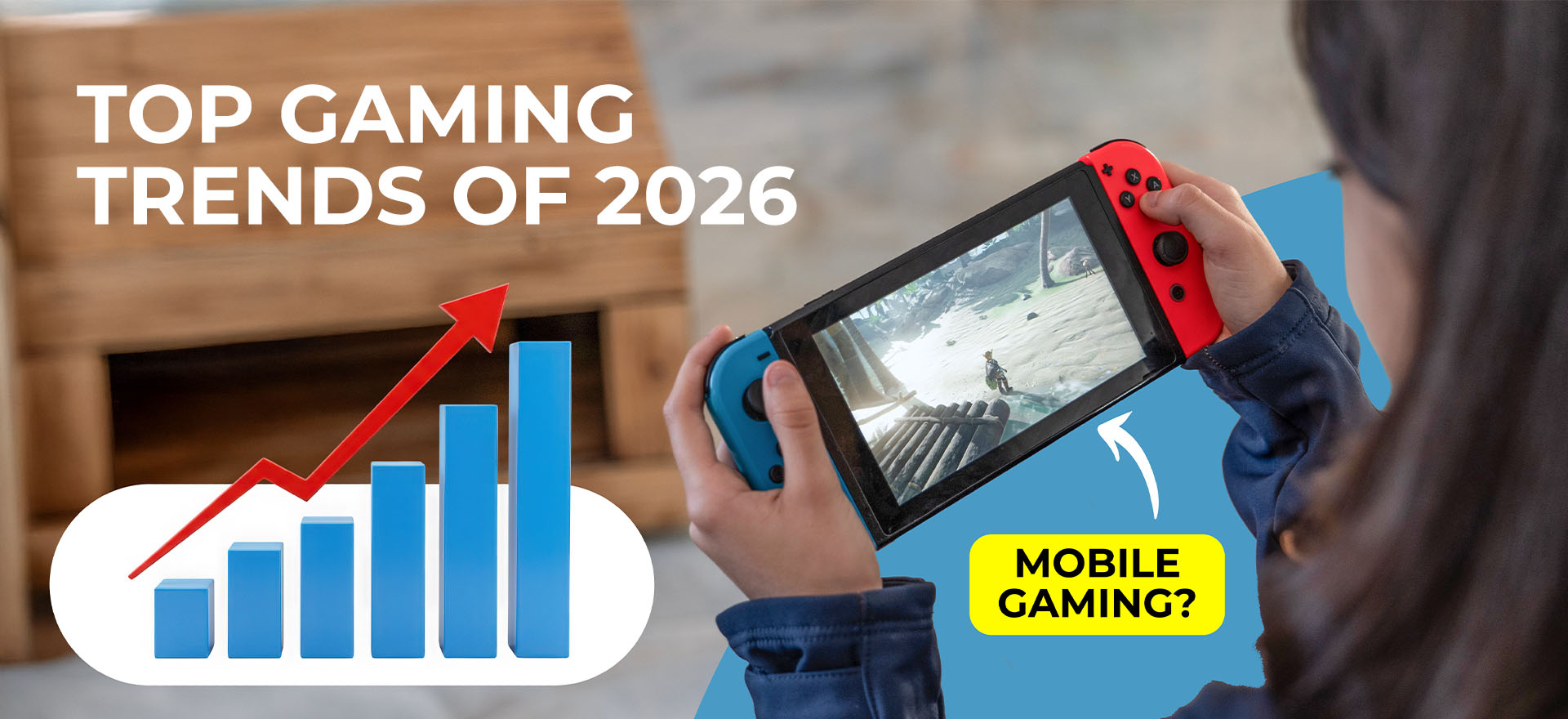
Yes, Hertz absolutely matters for mobile gaming and cloud gaming, though the implementation and accessibility might differ. Many modern high-end smartphones and tablets now come with 90Hz, 120Hz, or even higher refresh rate displays, offering a noticeably smoother experience for mobile games. This is especially beneficial for fast-paced mobile shooters or rhythm games. For cloud gaming services like Xbox Game Pass Ultimate or NVIDIA GeForce NOW, your experience is dictated by a few factors: the server's performance, your internet connection, and your display's refresh rate. While cloud gaming introduces inherent latency, playing on a high-Hertz monitor still ensures that the frames streamed to you are displayed as smoothly as possible on your end, providing the best visual output your local setup can achieve. As mobile gaming continues its dominance and social gaming thrives, higher refresh rates are becoming standard across all platforms.
How Can I Optimize My System to Maximize My Monitor's Hertz?
Getting the most out of your high-Hertz monitor involves a few optimization steps:
Update Graphics Drivers: Always keep your GPU drivers updated to the latest version. Manufacturers constantly release optimizations that can improve performance and stability, allowing your card to push more frames.
In-Game Settings: Reduce demanding graphical settings like anti-aliasing, shadow quality, or texture resolution if you’re not consistently hitting your monitor's target FPS. A slightly less visually stunning game running at 144 FPS on a 144Hz monitor feels much better than a gorgeous game at 70 FPS on the same monitor.
Use the Right Cables: Ensure you're using a DisplayPort 1.2+ or HDMI 2.0+ cable for 144Hz at 1080p or 1440p, and DisplayPort 1.4+ or HDMI 2.1 for 4K at high refresh rates. Older cables simply can't handle the bandwidth.
Disable V-Sync (if using Adaptive Sync): If you have FreeSync or G-Sync enabled, disable V-Sync in your game settings or GPU control panel. V-Sync can introduce input lag and interfere with adaptive sync's benefits.
Check Background Processes: Close unnecessary applications running in the background while gaming to free up CPU and RAM resources for your game.
By following these steps, you can ensure your system is performing at its best, allowing you to fully appreciate what does hertz mean in gaming.
Understanding what does hertz mean in gaming is no longer just for hardcore enthusiasts; it’s essential for any US gamer who values a smooth, responsive, and immersive experience. From reducing eye strain to gaining a competitive edge, a higher refresh rate monitor can truly elevate your precious gaming moments, helping you unwind, connect with friends, and build skills more effectively. Don't let choppy gameplay steal your joy. By understanding your hardware and making informed choices, you can achieve that buttery-smooth performance you deserve.
What's your biggest gaming challenge when it comes to performance or setup? Comment below!
FAQ Section
What is the minimum Hz for good gaming?
A 60Hz monitor is the minimum standard for enjoyable gaming. However, for a noticeably smoother experience, especially in fast-paced titles, 120Hz or 144Hz is generally considered the sweet spot for good gaming today.
Can I get 144Hz on a gaming laptop?
Yes, many modern gaming laptops feature built-in displays with 120Hz, 144Hz, or even higher refresh rates. Ensure the laptop's GPU is powerful enough to drive games at such frame rates to fully utilize the display.
Does a higher Hz reduce input lag?
While higher Hz monitors don't directly reduce peripheral input lag, they reduce system latency by displaying frames faster. This means you see the results of your inputs sooner, which can feel like reduced input lag and allows for quicker reactions.
Is 60Hz still playable in 2026?
Yes, 60Hz is still perfectly playable for many games and casual gamers, especially those focused on story, strategy, or puzzle genres. However, for competitive titles or general visual fluidity, higher refresh rates offer a significantly better experience.
Do all games benefit from high refresh rates?
Most games benefit from higher refresh rates in terms of visual smoothness, but the impact is most profound in fast-paced genres like first-person shooters, racing games, and fighting games where quick reactions and tracking moving targets are crucial. Slower-paced games might show less dramatic improvements.
What's the difference between FreeSync and G-Sync?
Both FreeSync (AMD) and G-Sync (NVIDIA) are adaptive sync technologies that eliminate screen tearing and stuttering by synchronizing your monitor's refresh rate with your GPU's frame rate. G-Sync typically uses a dedicated hardware module in the monitor, while FreeSync is an open standard and generally more affordable, often working with both AMD and NVIDIA GPUs (via 'G-Sync Compatible').
Hertz defines monitor refresh rate, higher Hz means smoother visuals, Hertz and FPS are distinct but related, 144Hz is a popular sweet spot for gaming, adaptive sync prevents screen tearing, check and adjust refresh rate in display settings, understanding Hz optimizes gaming performance.
35

What Does ADS Mean In Gaming Texting Io Hz Meaning In Gaming . 7 Best 480Hz Gaming Monitors July 2026 Tested Ranked Best 480Hz Gaming Monitors 768x429 . 60Hz Vs 144Hz Gaming Monitor Does Refresh Rate Matter Article2 03 Gaming Action Split . What Does Hertz Mean 7 Essential Brilliant Facts In 2026 SlangSphere Com 20263003 154136. What Does Hertz Mean In Gaming A Beginner Friendly Guide Hertz In Gaming



Hertz In Computer Science What Does This Unit Mean Frecuencia De Refresco . Best Polling Rate For Gaming In 2026 Best Polling Rate For Gaming In 2026 . What Does Hertz Mean In Gaming A Beginner Friendly Guide Latency In Gaming Experience . What Does Hertz Mean In Gaming A Beginner Friendly Guide Enhancing Your Video Gaming . 60Hz Vs 144Hz Gaming Monitor Does Refresh Rate Matter Article2 01 Hero Gaming Setup

What Are Hz In A Monitor And Should You Get A Higher Refresh Rate Hz Eng 1536x878 . Is 120Hz Crucial For Your Gaming Experience 7 . Hertz Frequency Unit ESR NMR Control Unit 115 V 50 60 Hz 3B HERTZ 12 . The Ultimate Guide To Choosing The Best Hz For Your Gaming Monitor Arzopa Best Hz For Gaming Monitor 2ac46d43 857b 4554 B46e . Unlocking The Power Of FPS And Hz In Gaming Gamer Org 10 780x439


The BEST Hertz Hz For A Gaming Monitor In 2021 YouTube . Is 144Hz Monitor Better Than 240Hz For Gaming Is 144hz Monitor Better Than 240hz 1759538008 768x432 . What Cable Do I Need For 60 Hz 360 Hz Monitor Full Guide What Cable Do I Need For 60 Hz 75 Hz 120 Hz 144 Hz 165 Hz 240 Hz And 360 Hz Monitor . What Does Hertz Mean In Gaming A Beginner Friendly Guide Display Explained . Is 240Hz Monitor Good For Gaming And Worth The Upgrade BenQ US Gaming LCD Article 240Hz Monitor KV1



Native Refresh Rate Explained Gaming Movies And Daily Use Arzopa 60hz Vs 120hz Vs 240hz.webp. Key Gaming Trends Of 2026 TREND . What Does Hz Stand For The Complete Guide To Frequency Hq720 . What Does Hertz Mean In Gaming A Beginner Friendly Guide Frequency Measurement In Units . What Does Hertz Mean In Gaming A Beginner Friendly Guide Enhanced Visuals And Performance


The World S First Gaming Monitor With A 1080Hz Refresh Rate Is Here Benq Refresh Rate . 60Hz 120hz 144hz Monitor For Gaming Which Is Better Gaming Rig Thy5NIchxX. What Is Hertz Electricity What Does Hertz Mean OVMN Heinrich Hertz 1857 1894 L . The Ultimate Guide To Choosing The Best Hz For Your Gaming Monitor Arzopa 60hz Vs 120hz. What GPU Can My Motherboard Support PC Guide 60hz Vs 144hz Vs 240hz


Hertz Frequency Unit . What Does Hz Mean In Gaming Revealed Foreign Lingo What Does Hz Mean In Gaming . Hands On With The ASUS ROG 540 Hz Monitor New Gaming Chair More . Tuner Metronome App Hertz . What Does Hz Mean For Monitors Monitor Refresh Rate Explained 84qzc